Article de presse
Baromètre QIMA Q3 2026 : Hormuz Fuel Crisis Expose les limites de la diversification de la chaîne d’approvisionnement
Jul 13, 2026
TL;DR
La crise du carburant d’Hormuz a mis en lumière une dure vérité: les chaînes d’approvisionnement occidentales se sont diversifiées depuis des années au-delà de la Chine, mais proche et reshoring n'a pas été suffisamment rapide pour réduire la dépendance à l'égard de l'Asie dans son ensemble. Étant donné que les pénuries de combustibles du Sud-Est et de l'Asie du Sud ont mis à mal la capacité de l'usine, Certains acheteurs occidentaux peuvent se retourner vers la Chine – alors que les marchés émergents sont confrontés à des risques de concentration encore plus élevés. Le baromètre Q3 de QIMA, en s'appuyant sur les données d'inspection des produits et d'audit des fournisseurs, examine comment les perturbations de 2026 remanient la concentration et la diversification des approvisionnements mondiaux.
Enlèvements de clés :
Les États-Unis et l'UE proches ne sont pas assez à l'échelle : La réponse précoce des acheteurs à la crise du carburant d'Hormuz a montré que les capacités occidentales proches de l'Asie manquent toujours d'échelle pour réduire significativement la dépendance vis-à-vis de l'Asie.
L'approvisionnement de la Chine réapparaît comme le repli de l'Occident : La pénurie de carburant limite la capacité de l'Asie du Sud et du Sud-Est, La Chine constate des signes avant-coureurs d'une augmentation de la demande de la part des acheteurs de l'UE et des États-Unis au deuxième trimestre.
Les acheteurs des marchés émergents renforcent la dépendance de la Chine : La Chine représente désormais 78% de sa demande d'inspection en dehors de l'Asie, augmenter à 81 % en Amérique du Sud et en Amérique latine.
Amérique du Sud et Amérique latine montrent une promesse de diversification précoce : la demande d'inspection intra-régionale est croissante à des taux à deux chiffres – toujours à petite échelle, mais une tendance qui vaut la peine d'être regardée.
Écoutez notre podcast Supply Chain Soundbites pour une panne de 6 minutes sur les pénuries de carburant en Asie et sur les quarts d'approvisionnement Q3.
Instantané de la chaîne d’approvisionnement QIMA:
Points de données clés de Q2 :
35% (plus élevé depuis 2024) : part de la Chine dans les volumes d’inspection et d’audit de l’Amérique du Nord
81 % : Part de la Chine dans les volumes d'inspection et d'audit en Amérique du Sud et en Amérique Latine
+14% YoY (Apr) → -5% YoY (juin) : baisse de la demande de l'UE pour les inspections et audits de l'Asie du Sud-Est
Les risques les plus importants à surveiller dans Q3 :
Les pénuries de carburant limitent les options de diversification en Asie
Proche de la course et de la résurrection bloquée
Risque de concentration de la Chine, en particulier pour les marchés émergents

Les Etats-Unis et l’UE qui ne sont pas en train de réduire leur dépendance à l’égard de l’Asie
La fermeture du détroit d’Hormuz fin février et les pénuries de carburant qui ont suivi en Asie a révélé une dépendance par couches au cœur des chaînes d'approvisionnement mondiales de biens de consommation. L'Occident compte encore beaucoup sur l'Asie pour les produits finis : plus de 80 % de l'électronique , jouets, et les biens domestiques vendus aux États-Unis et dans l'UE sont importés d'Asie. Mais de nombreux centres industriels asiatiques, y compris le Vietnam et le Bangladesh, sont eux-mêmes fortement dépendants sur les importations de carburant au Moyen-Orient.
La proximité et la réhabilitation étaient censées réduire cette exposition, mais les progrès n’ont pas maintenu le rythme. Dans l'enquête QIMA sur les achats mondiaux, environ 1 entreprise américaine sur 2 rapporte régulièrement des projets de développement du proche ou de la restauration, et plus de 70 % de ces plans se traduisent par des actions. Pourtant, les données sur le terrain montrent que le changement reste limité et que la dynamique ralentit : dans le deuxième trimestre 2026, Les clients de QIMA de l’UE et de 7% en Amérique du Nord ne représentaient que 11% de leurs volumes de service inférieurs aux moyennes de 2025. Des recherches récentes de Kearney et ING Think pointent sur des contraintes similaires.
En conséquence, lorsque la capacité de l'Asie du Sud et du Sud-Est a été soumise à la contrainte de la crise du carburant Hormuz Les chaînes d’approvisionnement occidentales ont constaté que leurs options de redirection de la demande étaient encore limitées.
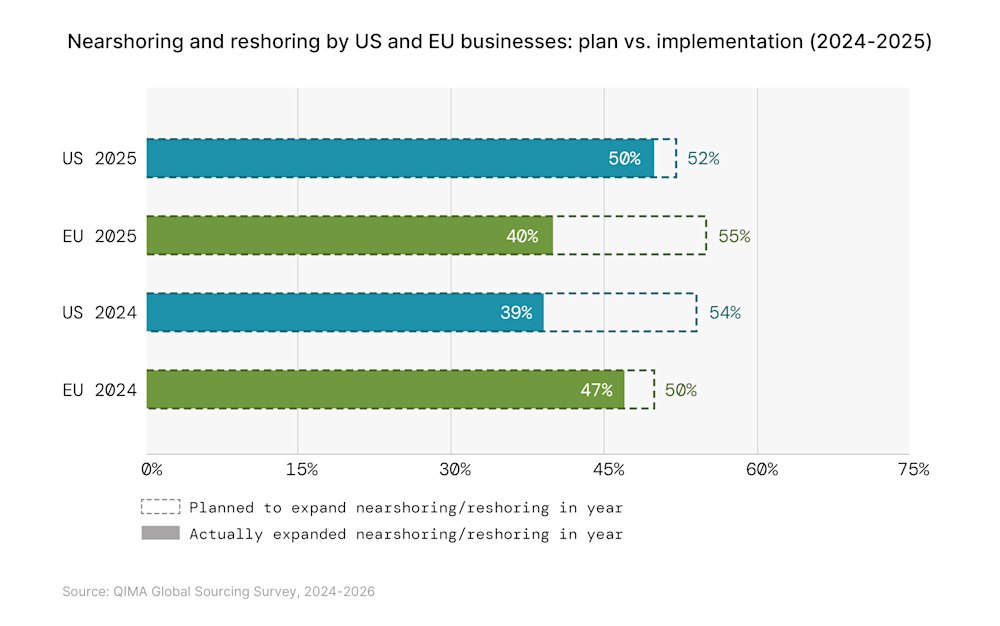
Figure 1 : L'intention de nearshoring ou reshoring est répandue parmi les entreprises américaines et européennes, et la plupart de ces intentions se concrétisent en actions réelles.
Les acheteurs occidentaux sont de retour vers la Chine en tant que Hormuz Fuel Crisis Alternatives
En tant que les usines d'Asie du Sud-Est et du Sud sont soumises à la pression en raison de pénuries de carburant, Les acheteurs américains et européens commencent à transférer les commandes vers des capacités sûres. Cependant, les données du QIMA du Q2 suggèrent que jusqu'à présent, ces changements sont restés en Asie – souvent en direction de la Chine, où la fabrication, alimentée principalement par le charbon et les énergies renouvelables, a été plus isolée du choc énergétique d'Hormuz que les usines de l'Asie du Sud-Est qui dépendent de l'importation de carburant.
La part de la Chine dans les volumes de service de l'Amérique du Nord avec QIMA a atteint un sommet de six quarts de hauteur de 35 % au deuxième trimestre, tandis que la part de l'Asie du Sud-Est a reculé à des niveaux d'avant 2025. Parmi les acheteurs de l'UE, la part de l'Asie du Sud-Est dans les inspections et les audits a diminué chaque mois de Q2, suivant une baisse de la demande correspondante : de la croissance de +14% YoY en avril à -5% de la contraction de YoY en juin. Entre-temps, la demande de l'UE pour les inspections en Chine a augmenté au cours du trimestre, finissant le deuxième trimestre avec une expansion de +10% chaque année.
Compte tenu du décalage entre les ordres et les inspections, le Q3 est toujours en cours. Mais les signaux précoces indiquent déjà à quel point la dépendance de l’Occident à l’égard de l’Asie s’étend – et à quelle vitesse un changement vers la Chine devient l’option de sauvegarde principale.
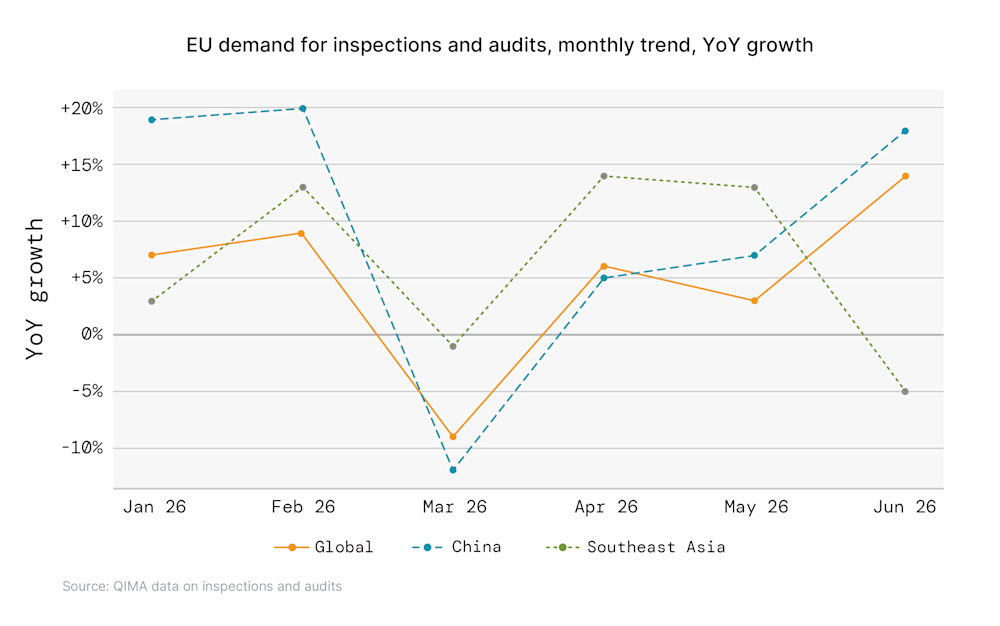
Figure 2 : La demande d'inspection de l'UE semble se retourner vers la Chine car la croissance de l'Asie du Sud-Est s'inverse brutalement suite aux pénuries de combustible provoquées par Hormuz.
La crise des marchés émergents sur les achats en Chine stimule la concentration des risques
La dépendance des importations asiatiques ne se limite pas aux acheteurs occidentaux. Les acheteurs des marchés émergents (ME), y compris l'Amérique du Sud et l'Amérique Latine, l'Europe de l'Est, l'Afrique et le Moyen-Orient, sont également fortement dépendants des importations de produits de consommation – et moins diversifiés que les acheteurs des marchés développés. Leur demande croît et se concentre de plus en plus sur un seul marché : la Chine.
Les données QIMA Q2 indiquent une demande d’inspections en Chine en hausse de +18% auprès de clients des marchés émergents en dehors de l’Asie. Au cours de la même période, la Chine a représenté 78 % de toutes les demandes d'inspection et d'audit chez ces acheteurs, augmenter à 81 % pour les clients en Amérique du Sud et en Amérique latine. Pour les acheteurs des marchés développés (Amérique du Nord, Europe de l’Ouest et Australie/Nouvelle-Zélande combinées) le chiffre équivalent était de 50%. Avec des acheteurs EM déjà dépendants d'un seul marché, la crise du carburant ajoute une autre couche de risque : au fur et à mesure que la capacité de l’Asie du Sud-Est se resserre, ils pourraient s’appuyer encore plus sur la Chine.
La gestion de la qualité ajoute une autre raison de concentration. Les données d'inspection des produits de QIMA montrent les envois des marchés émergents en dehors des limites de qualité acceptables (AQL) plus souvent que les envois développés sur le marché. Jusqu'à présent en 2026, 26 % des commandes électroniques et électriques EM n'ont pas atteint l'AQL, contre 8 % des commandes passées par des clients du marché développé ; en matière de produits ménagers, l'écart était de 18 % par rapport à 11 %. Ceci est vraisemblablement dû à des différences entre la maturité du QC du côté de l'acheteur et le rendement du fournisseur. Alors que les acheteurs des marchés émergents développent encore leurs programmes de qualité, ils peuvent continuer à concentrer leurs achats sur simplifier la gestion de la qualité – au prix de la diversification.
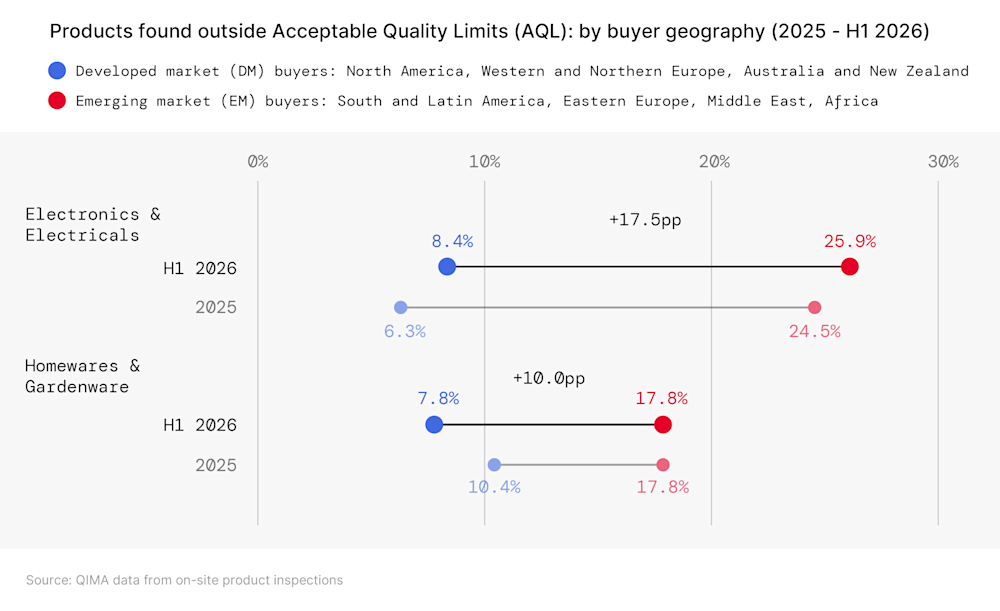
Figure 3 : Le fossé qui sépare les acheteurs du marché émergent et du marché développé s'est creusé dans les domaines de l'électronique et des produits domestiques au cours de l'année écoulée, le plus brutalement en électronique.
Les points commerciaux intra-régionaux de l'Amérique du Sud et de l'Amérique latine vers les opportunités de proximité
Les données du T2 2026 de QIMA montrent une croissance à deux chiffres de la demande d’inspections et d’audits commandés par les acheteurs sud-américains et latino-américains pour des commandes intra-régionales – petites échelles, mais avec des implications plus larges, car l'approvisionnement plus proche de la maison pourrait faciliter la dépendance de la région à l'égard des importations au fil du temps.
Ce changement s'aligne sur une poussée régionale plus large : de la CNUCED 2025 mise à jour note que le commerce intra-régional ne représentait que 16% du commerce total d'Amérique latine en 2025 alors que CAF, la Banque de Développement de l’Amérique latine, souligne l’importance d’une intégration plus profonde en tant que stratégie de résilience. Si cet élan se construit, ces acheteurs pourraient croître leurs achats régionaux de manière organique, plutôt que de les moderniser plus tard, comme de nombreux acheteurs occidentaux tentent à présent de le faire.
Q3 Perspectives : La crise de l’énergie d’Hormuz apportera-t-elle du carburant aux Efforts d’amorçage de l’Ouest ?
Le baromètre de QIMA a constamment mis en évidence la diversification en tant que stratégie clé de gestion des risques – et en tant que contributeur important à la résilience de la chaîne d’approvisionnement en 2025. Mais les données du Q2 compliquent cette image : diversifier sur les marchés offshore, sans procéder à un redimensionnement proche, encore les acheteurs laissés exposés à un goulot d'étranglement partagé en amont dans la crise du carburant Hormuz.
La déformation résultante sur la capacité de fournisseur et d'expédition montre que pas toutes les stratégies de diversification offrent la même résilience. Q3 révélera si les acheteurs occidentaux traitent cela comme un choc unique ou comme un signal pour accélérer de nouveau le rapprochement.
Partager ceci sur